


See The Notes.
Play Along.
Instantly.
The smart Clavinova. The feel of a CLP and the power of a CVP, controlled from your tablet through Yamaha's Smart Pianist app, with Stream Lights that show you exactly which notes to play.

The simplest way to learn.
The CSP combines the elegant simplicity of the CLP with the diverse capabilities of the CVP. Every feature is controlled from Yamaha's Smart Pianist app on your own tablet, so the piano keeps its clean, uncluttered look. Turn any song into a chord chart or score with Audio to Score, play along with a virtual ensemble, and let Stream Lights guide your hands.
Guide lights above the keys show you which notes to play, and even wait for you before moving on.
Control every feature from your tablet, so the piano keeps its clean, uncluttered design.
Turn your favorite songs into easy chord charts or piano scores, then play right along.
Every CSP model
In upright and grand cabinets, there's a CSP for any space. Tap any model for full details, finishes, and pricing.
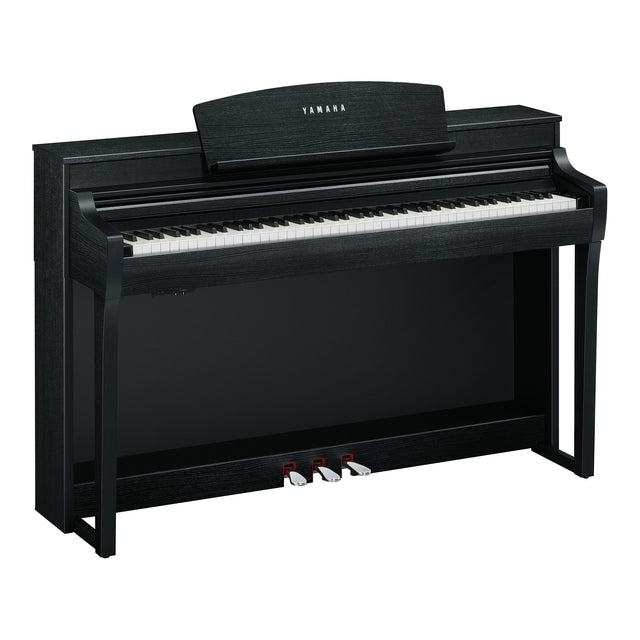
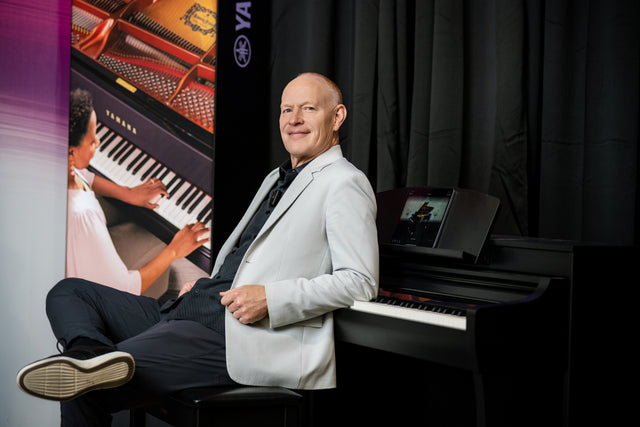
CSP255
Clavinova tablet-controlled smart piano with bench
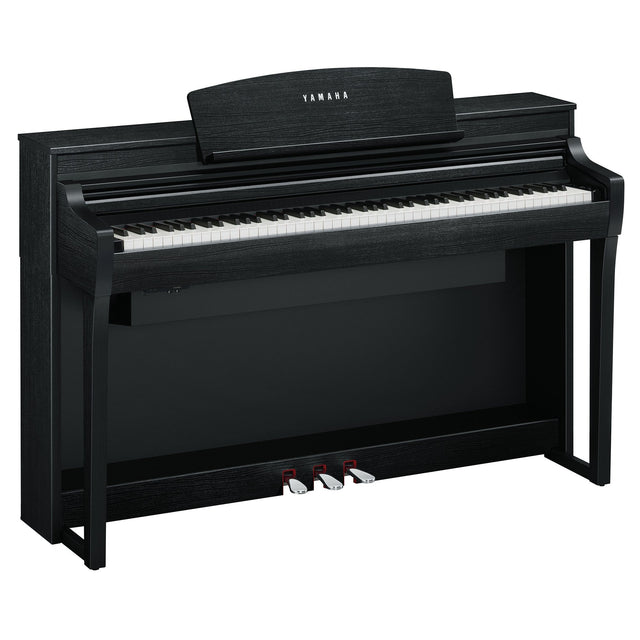

CSP275
Clavinova tablet-controlled smart piano with bench
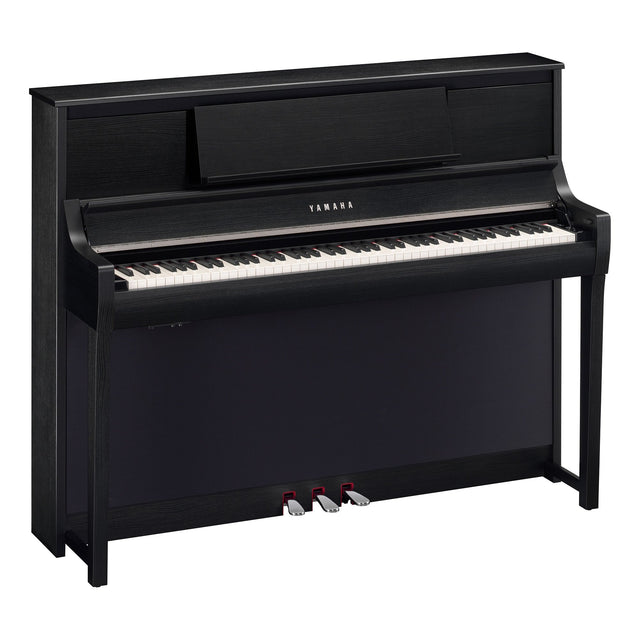

CSP295
Tall cabinet, tablet-controlled smart piano with bench
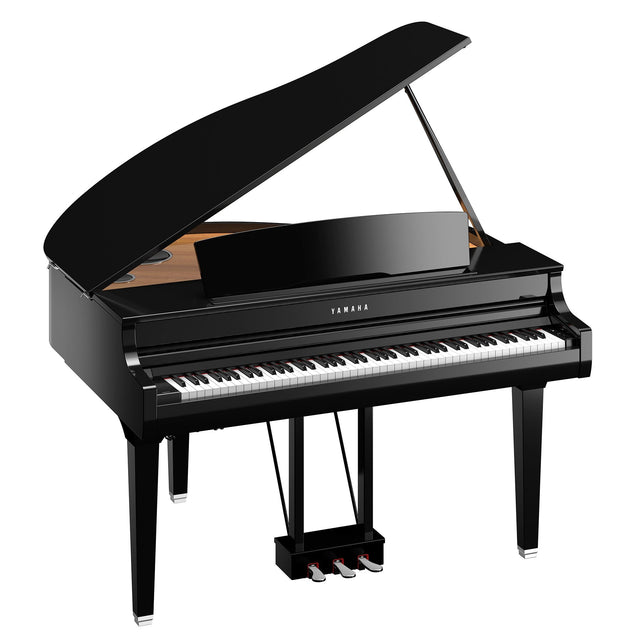

CSP295GP
Clavinova tablet-controlled smart digital grand piano with bench
Features
The CSP hides its technology and keeps the piano clean. Here is what each feature actually is, and whether it should change which model you buy.

Tall LED columns above each key show the note falling toward you, so you can see what is coming before you have to play it.
This is the CSP's signature, and nothing else in the lineup does it quite this way. Choose a song and the lights show you where to put your hands. The note streams down toward the key so you see it approaching rather than arriving.
Set it to wait and the piano holds until you play the right note, rather than leaving you behind. It is the closest thing to a patient teacher who never sighs at you.
Yamaha calls the same idea guide lamps on the CVP. The CLP has nothing like it.
Found on Every CSP.

On a CSP this is not an accessory. Your iPad is the piano's entire control surface, which is exactly why the instrument looks so clean.
There is no screen on a CSP. That is a deliberate decision, not a missing feature. Everything lives in Yamaha's free Smart Pianist app, so the piano in your room looks like a piano.
The part people do not expect: Audio to Score. Point it at a song in your music library and it will work out the chords and produce a playable chord chart or piano score. A song you have loved for twenty years becomes something you can sit down and play.
Found on Every CSP. Essential, not optional.

Play a chord with your left hand and a full backing band follows you, in time, in your key.
Pick a style: bossa nova, gospel, big band, country. Play a chord. Drums, bass, guitar and horns come in behind you and follow your changes. They will play an intro, drop into a fill, take a variation, and end cleanly on cue.
You are conducting, not playing along to a backing track.
Found on CSP-255 and 275: 495 styles · CSP-295 and 295GP: 525.

This is the mechanism under the keys, and it is the single thing you will feel every time you sit down.
On a real grand, a key is a lever that throws a hammer at a string. It is heavier in the bass, lighter in the treble, and it resists you differently depending on how hard you play. That resistance is what a pianist means by touch.
GrandTouch-S is the excellent everyday action. GrandTouch is the longer, heavier one, closer to a real grand. Both include escapement.
Found on GrandTouch on CSP-295 and 295GP. GrandTouch-S on CSP-255 and 275.

The white keys are made of real wood, like an acoustic piano, instead of molded plastic.
Wood is denser and heavier than plastic, and it moves differently under your fingers. A wooden key has more inertia, so it settles rather than clatters, and it stays stable as the room warms and cools.
Worth clearing up: wooden keys and key tops are different things. Every Clavinova has synthetic ebony and ivory keytops, the textured surface you actually touch. The wood is the key itself, underneath.
Found on CSP-275, 295 and 295GP. The CSP-255 has synthetic keys.

Small lead weights inside the keys that make quiet, slow playing easier and fast playing less tiring.
This is the spec nobody explains, so here it is. A key has to be heavy enough to feel substantial, but that same weight fights you when you play very softly or very fast.
Counterweights solve it. A weight is set into the key to balance the hammer mechanism, so the key returns to rest more readily. Pianissimo passages become easier to control, and rapid repeated notes stop wearing your hand out.
Found on CSP-295 and CSP-295GP.

Headphone sound recorded the way your own two ears would hear it, so the piano surrounds you instead of sitting inside your skull.
Anyone who has practiced in headphones knows the problem. The sound arrives flat and pressed against your ears, and after an hour it is exhausting.
Yamaha recorded these pianos using microphones placed where a player's ears would actually be. Put the headphones on and the instrument opens out in front of you, with depth and space.
If you are buying this piano so the family can sleep while you practice, this is the feature that decides whether you enjoy it.
Found on Every CSP.

The piano models how its strings would ring against each other, so held notes and the sustain pedal behave like the real thing.
Press the sustain pedal on an acoustic piano and every damper lifts. Now every string is free to vibrate in sympathy with whatever you play. That wash of resonance is a huge part of why a real piano sounds alive.
VRM calculates that interaction as you play, in real time, rather than replaying a fixed recording.
Found on Every CSP.

Change the piano itself: the lid position, the room it sits in, how tightly the strings are tuned against each other.
A concert technician spends hours adjusting a piano for a hall. Piano Room hands you the same controls, through Smart Pianist.
Open or close the virtual lid to brighten or soften the tone. Move the instrument from an intimate room to a recital hall. Adjust string resonance, damper behavior and touch response until it sits right under your hands.
Found on Every CSP.
Not sure which CSP is right for you?
Compare every model side by side. Specs, features, and price in one view.
Compare models