


Features
Spec sheets are full of words nobody explains. Counterweights. Binaural. VRM. Here is what each one means, in plain English, and whether it should change what you buy.

This is the mechanism under the keys, and it is the single thing you will feel every time you sit down.
On a real grand, a key is a lever that throws a hammer at a string. It is heavier in the bass, lighter in the treble, and it resists you differently depending on how hard you play. That resistance is what a pianist means by touch.
Yamaha builds two versions. GrandTouch-S is the excellent everyday action. GrandTouch is the longer, heavier one, closer to a real grand. Both include escapement, the tiny notch you feel near the bottom of a very soft keypress on an acoustic.
Found on Every Clavinova. GrandTouch on CLP-875, 885, 895GP, CVP-905, 909, 909GP, CSP-295 and 295GP.

The white keys are made of real wood, like an acoustic piano, instead of molded plastic.
Wood is denser and heavier than plastic, and it moves differently under your fingers. A wooden key has more inertia, so it settles rather than clatters, and it stays stable as the room warms and cools.
Worth clearing up: wooden keys and key tops are different things. Every Clavinova has synthetic ebony and ivory keytops, the textured surface you actually touch. The wood is the key itself, underneath.
Wooden keys are a step-up feature inside every series, not a marker of one series. The entry model of each family has synthetic keys.
Found on CLP-845, 875, 885, 895GP · CVP-905, 909, 909GP · CSP-275, 295, 295GP

Small lead weights inside the keys that make quiet, slow playing easier and fast playing less tiring.
This is the spec nobody explains, so here it is. A key has to be heavy enough to feel substantial, but that same weight fights you when you play very softly or very fast.
Counterweights solve it. A weight is set into the key to balance the hammer mechanism, so the key returns to rest more readily. Pianissimo passages become easier to control, and rapid repeated notes stop wearing your hand out. Concert grands have done this for a century.
You will not see it, and you may not consciously notice it. You will notice that the piano stops arguing with you in the quiet passages.
Found on CLP-885, 895GP · CVP-909, 909GP · CSP-295, 295GP

Every single key has its own hammer weight, heaviest in the bass, lightest in the treble, with no steps in between.
On an acoustic piano the hammers get gradually lighter as you move up the keyboard. Cheaper digital pianos fake this by splitting the keyboard into three or four zones, so the weight jumps as you cross a boundary.
Linear grading gives all eighty-eight keys their own individually specified weight. Run your hand up the keyboard and the change is continuous, the way it is on a real instrument.
Found on CLP-875, 885, 895GP · CVP-905, 909, 909GP · CSP-295, 295GP

Headphone sound recorded the way your own two ears would hear it, so the piano surrounds you instead of sitting inside your skull.
Anyone who has practiced in headphones knows the problem. The sound arrives flat and pressed against your ears, and after an hour it is exhausting.
Yamaha recorded these pianos using microphones placed where a player's ears would actually be. Put the headphones on and the instrument opens out in front of you, with depth and space, the way it does when you are sitting at it.
If you are buying this piano so the family can sleep while you play, this is the feature that decides whether you enjoy it.
Found on Every Clavinova. CFX and Bösendorfer on all but the CLP-825.

The piano models how its strings would ring against each other, so held notes and the sustain pedal behave like the real thing.
Press the sustain pedal on an acoustic piano and every damper lifts. Now every string in the instrument is free to vibrate in sympathy with whatever you play. That wash of resonance is a huge part of why a real piano sounds alive.
VRM calculates that interaction as you play, in real time, rather than playing back a fixed recording. Hold a chord, pedal into it, and the sound keeps evolving.
Found on Every Clavinova

How you press the key, not just how hard, changes the tone. Exactly as it does on an acoustic.
On a real piano, two notes at identical volume can sound completely different depending on how you got there. A sharp attack bites. A slow, weighted press blooms. Pianists spend years learning to control this, and most digital pianos throw it away, reducing everything to one number for how hard you hit the key.
Grand Expression Modeling listens to the whole gesture. It is the difference between an instrument that responds and one that merely plays back.
Found on Every Clavinova except the CVP-701

Change the piano itself: the lid position, the room it sits in, how tightly the strings are tuned against each other.
A concert technician spends hours adjusting a piano for a hall. Piano Room hands you the same controls.
Open or close the virtual lid to brighten or soften the tone. Move the instrument from an intimate room to a recital hall. Adjust string resonance, damper behavior and touch response until it sits right under your hands.
It sounds like a gimmick until you use it. Then it is the first thing you set up on a new piano.
Found on Every Clavinova except the CLP-825

Play a chord with your left hand and a full backing band follows you, in time, in your key.
This is the feature that turns a piano into a one-person band, and it is the single biggest reason people choose a CVP.
Pick a style: bossa nova, gospel, big band, country. Play a chord. Drums, bass, guitar and horns come in behind you and follow your changes. They will play an intro, drop into a fill when you ask, take a variation, and end cleanly on cue. You are conducting, not playing along to a backing track.
The CLP has a small set of simple rhythms. The CVP and CSP have hundreds of full arrangements.
Found on CVP: 310 to 675 styles · CSP: 495 to 525 · CLP: 20 basic rhythms

Lights above the keys show you which note comes next, and the piano waits for you to get it right.
Yamaha uses two names for this, which causes no end of confusion. On the CVP they are called guide lamps. On the CSP they are called Stream Lights and take the form of tall LED columns that show the note falling toward the key, so you can see it coming.
Either way the idea is the same. Choose a song, and the keyboard tells you where to put your hands. Set it to wait, and it will hold until you play the right note rather than leaving you behind.
It is the closest thing to a patient teacher who never sighs at you. The CLP does not have this.
Found on CVP (guide lamps) · CSP (Stream Lights). Not on CLP.

A screen built into the piano itself, so you never need a tablet to reach the features.
With over a thousand sounds and hundreds of styles on board, you need a way in. The CVP puts a color touchscreen right on the instrument, up to nine inches, and everything is a tap away.
This is the fork in the road between the CVP and the CSP. The CVP puts the screen on the piano. The CSP deliberately leaves it off, keeping the instrument clean, and runs everything from your iPad instead. Neither is better. It is a question of whether you want the technology visible or invisible.
Found on CVP-905, 909 and 909GP. The CVP-701 has a small color LCD, not a touchscreen.

A free Yamaha app that turns your tablet into the piano's screen, and can turn a song you love into sheet music.
Connect a tablet and every setting on the instrument appears in front of you, laid out properly instead of buried in a menu.
The part people do not expect: Audio to Score. Point it at a song in your music library and it will work out the chords and produce a playable chord chart or piano score. A song you have loved for twenty years becomes something you can sit down and play.
It works with every Clavinova. On the CSP it is not an accessory, it is the entire control surface.
Found on Every Clavinova. Essential on CSP.
See which pianos have what.
Pick a few models and compare them on the features you just read about.
Not sure what a term means? Tap any spec with a question mark. Read the features, explained →
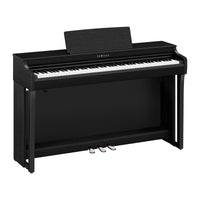 CLP-825Starting at$2,249.99View product → CLP-825Starting at$2,249.99View product → | 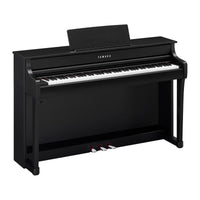 CLP-835Starting at$3,299.99View product → CLP-835Starting at$3,299.99View product → | 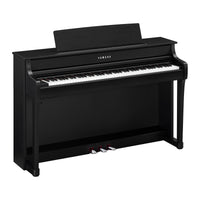 CLP-845Starting at$4,299.99View product → CLP-845Starting at$4,299.99View product → | 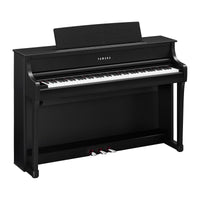 CLP-875Starting at$5,699.99View product → CLP-875Starting at$5,699.99View product → | 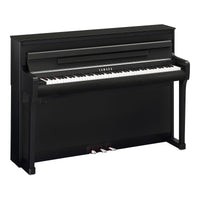 CLP-885Starting at$7,499.99View product → CLP-885Starting at$7,499.99View product → | 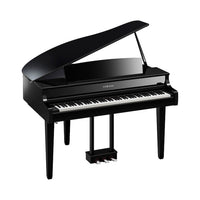 CLP-865GPStarting at$6,799.99View product → CLP-865GPStarting at$6,799.99View product → | 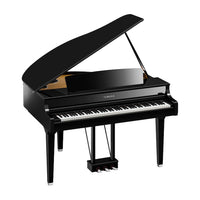 CLP-895GPStarting at$9,499.99View product → CLP-895GPStarting at$9,499.99View product → | 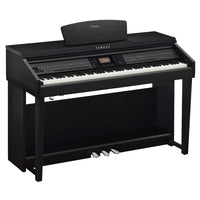 CVP-701Starting at$4,999.99View product → CVP-701Starting at$4,999.99View product → | 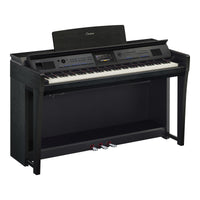 CVP-905Starting at$8,999.99View product → CVP-905Starting at$8,999.99View product → | 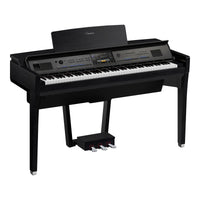 CVP-909Starting at$14,199.99View product → CVP-909Starting at$14,199.99View product → | 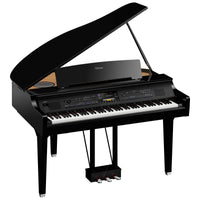 CVP-909GPStarting at$19,999.99View product → CVP-909GPStarting at$19,999.99View product → | 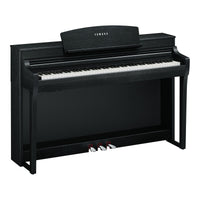 CSP-255Starting at$4,199.99View product → CSP-255Starting at$4,199.99View product → | 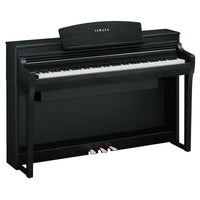 CSP-275Starting at$5,799.99View product → CSP-275Starting at$5,799.99View product → | 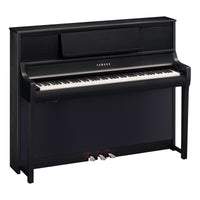 CSP-295Starting at$8,199.99View product → CSP-295Starting at$8,199.99View product → | 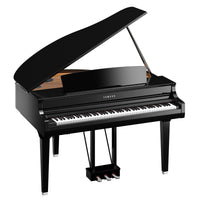 CSP-295GPStarting at$11,799.99View product → CSP-295GPStarting at$11,799.99View product → | 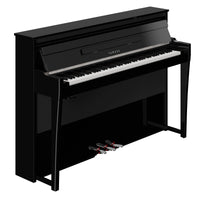 NU1XAStarting at$7,899.99View product → NU1XAStarting at$7,899.99View product → | 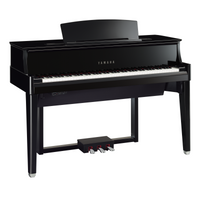 N1XStarting at$10,549.99View product → N1XStarting at$10,549.99View product → | |
|---|---|---|---|---|---|---|---|---|---|---|---|---|---|---|---|---|---|
| Keyboard | |||||||||||||||||
| Keys | 88 | 88 | 88 | 88 | 88 | 88 | 88 | 88 | 88 | 88 | 88 | 88 | 88 | 88 | 88 | 88 | 88 |
| Action | GrandTouch-S | GrandTouch-S | GrandTouch-S | GrandTouch | GrandTouch | GrandTouch-S | GrandTouch | GH3X | GrandTouch | GrandTouch | GrandTouch | GrandTouch-S | GrandTouch-S | GrandTouch | GrandTouch | Real Acoustic Upright Piano Action | Real Acoustic Grand Piano Action |
| Key & hammer sensors | — | — | — | — | — | — | — | — | — | — | — | — | — | — | — | Non-contact, electromagnetic | Non-contact, optical fiber |
| Wooden keys (white) | — | — | ✓ | ✓ | ✓ | — | ✓ | — | ✓ | ✓ | ✓ | — | ✓ | ✓ | ✓ | ✓ | ✓ |
| 88-key Linear Graded Hammers | — | — | — | ✓ | ✓ | — | ✓ | — | ✓ | ✓ | ✓ | — | — | ✓ | ✓ | ✓ | ✓ |
| Counterweights | — | — | — | — | ✓ | — | ✓ | — | — | ✓ | ✓ | — | — | ✓ | ✓ | ✓ | ✓ |
| Synthetic ebony & ivory keytops | ✓ | ✓ | ✓ | ✓ | ✓ | ✓ | ✓ | ✓ | ✓ | ✓ | ✓ | ✓ | ✓ | ✓ | ✓ | ✓ | ✓ |
| Pedals | |||||||||||||||||
| Pedals | 3: Damper, Sostenuto, Soft | 3: Damper, Sostenuto, Soft | 3: Damper, Sostenuto, Soft | 3: Damper, Sostenuto, Soft | 3: Damper, Sostenuto, Soft | 3: Damper, Sostenuto, Soft | 3: Damper, Sostenuto, Soft | 3: Damper, Sostenuto, Soft | 3: Damper, Sostenuto, Soft | 3: Damper, Sostenuto, Soft | 3: Damper, Sostenuto, Soft | 3: Damper, Sostenuto, Soft | 3: Damper, Sostenuto, Soft | 3: Damper, Sostenuto, Soft | 3: Damper, Sostenuto, Soft | 3: Damper, Sostenuto, Soft | 3: Damper, Sostenuto, Soft |
| GrandTouch pedals | Yes | Yes | Yes | Yes (GP Response) | Yes (GP Response) | Yes | Yes (GP Response) | — | Yes | Yes (GP Response) | Yes (GP Response) | — | Yes | Yes (GP Response) | Yes (GP Response) | Yes (GP Response) | GP Response damper only |
| Sound | |||||||||||||||||
| Concert-grand voices | CFX & Bösendorfer Imperial | CFX & Bösendorfer Imperial | CFX & Bösendorfer Imperial | CFX & Bösendorfer Imperial | CFX & Bösendorfer Imperial | CFX & Bösendorfer Imperial | CFX & Bösendorfer Imperial | CFX & Bösendorfer Imperial | CFX & Bösendorfer Imperial | CFX & Bösendorfer Imperial | CFX & Bösendorfer Imperial | CFX & Bösendorfer Imperial | CFX & Bösendorfer Imperial | CFX & Bösendorfer Imperial | CFX & Bösendorfer Imperial | CFX & Bösendorfer Imperial | CFX & Bösendorfer Imperial |
| Binaural headphone sampling | CFX only | CFX only | CFX & Bösendorfer | CFX & Bösendorfer | CFX & Bösendorfer | CFX & Bösendorfer | CFX & Bösendorfer | CFX & Bösendorfer | CFX & Bösendorfer | CFX & Bösendorfer | CFX & Bösendorfer | CFX & Bösendorfer | CFX & Bösendorfer | CFX & Bösendorfer | CFX & Bösendorfer | CFX & Bösendorfer | CFX only |
| Virtual Resonance Modeling | ✓ | ✓ | ✓ | ✓ | ✓ | ✓ | ✓ | ✓ | ✓ | ✓ | ✓ | ✓ | ✓ | ✓ | ✓ | ✓ | ✓ |
| Grand Expression Modeling | ✓ | ✓ | ✓ | ✓ | ✓ | ✓ | ✓ | — | ✓ | ✓ | ✓ | ✓ | ✓ | ✓ | ✓ | — | — |
| Polyphony | 256 | 256 | 256 | 256 | 256 | 256 | 256 | 256 | 256 | 256 | 256 | 256 | 256 | 256 | 256 | 256 | 256 |
| Total voices | 10 | 38 | 38 | 38 | 53 + 480 XG | 38 | 53 + 480 XG | 777 + 480 XG | 1,315 + 480 XG | 1,605 + 480 XG | 1,605 + 480 XG | 772 | 772 | 872 | 872 | 28 | 15 |
| Control panel | |||||||||||||||||
| Display | — | Full Dots LCD | Full Dots LCD | Full Dots LCD | Full Dots LCD | Full Dots LCD | Full Dots LCD | TFT Color LCD (4.3″) | Color touch (7″) | Color touch (9″) | Color touch (9″) | Tablet (Smart Pianist) | Tablet (Smart Pianist) | Tablet (Smart Pianist) | Tablet (Smart Pianist) | — | — |
| Color touchscreen | — | — | — | — | — | — | — | — | ✓ | ✓ | ✓ | — | — | — | — | — | — |
| Guide lamps (key lights) | — | — | — | — | — | — | — | Guide Lamp | Guide Lamp | Guide Lamp | Guide Lamp | Stream Lights | Stream Lights | Stream Lights | Stream Lights | — | — |
| Features | |||||||||||||||||
| Piano Room | — | ✓ | ✓ | ✓ | ✓ | ✓ | ✓ | ✓ | ✓ | ✓ | ✓ | ✓ | ✓ | ✓ | ✓ | — | — |
| Audio recording | — | ✓ | ✓ | ✓ | ✓ | ✓ | ✓ | ✓ | ✓ | ✓ | ✓ | ✓ | ✓ | ✓ | ✓ | ✓ | ✓ |
| Accompaniment (styles / rhythms) | — | 20 rhythms | 20 rhythms | 20 rhythms | 20 rhythms | 20 rhythms | 20 rhythms | 310 styles | 525 styles | 675 styles | 675 styles | 495 styles | 495 styles | 525 styles | 525 styles | — | — |
| Microphone input | — | — | — | — | — | — | — | ✓ | ✓ | ✓ | ✓ | ✓ | ✓ | ✓ | ✓ | — | — |
| Smart Pianist app | ✓ | ✓ | ✓ | ✓ | ✓ | ✓ | ✓ | ✓ | ✓ | ✓ | ✓ | ✓ | ✓ | ✓ | ✓ | ✓ | ✓ |
| Bluetooth | ✓ | ✓ | ✓ | ✓ | ✓ | ✓ | ✓ | ✓ | ✓ | ✓ | ✓ | ✓ | ✓ | ✓ | ✓ | ✓ | ✓ |
| Recording | |||||||||||||||||
| Preset songs | 10 + 50 + 303 | 23 + 50 + 303 | 23 + 50 + 303 | 23 + 50 + 303 | 27 + 50 + 303 | 23 + 50 + 303 | 27 + 50 + 303 | 65 | 50 + 303 + 60 | 50 + 303 + 60 | 50 + 303 + 60 | 403 | 403 | 403 | 403 | 50 + 28 + 303 | 10 + 15 |
| MIDI record tracks | 2 | 2 | 16 | 16 | 16 | 16 | 16 | 16 | 16 | 16 | 16 | 16 | 16 | 16 | 16 | 16 | 1 |
| Sound system | |||||||||||||||||
| Amplifiers | 20 W ×2 | 30 W ×2 | (45+45 W) ×2 | (45+25+40 W) ×2 | (45+30+40 W) ×2 | (45+35 W) ×2 | (45+45+45 W) ×2 | 25 W ×2 | (45+20 W) ×2 | (40+30+20 W) ×2 + 80 W | (40+30+20 W) ×2 + 80 W | 40 W ×2 | (50+50 W) ×2 | (50+50+40 W) ×2 | (50+50+40 W) ×2 | (40+45 W) ×2 | 30 W ×6 |
| Speakers | 12 cm ×2 | 16 cm ×2 | (16 + 8 cm) ×2 | (16 + 8 + 2.5 cm) ×2 | (16 + 8 + 2.5 cm) ×2, spruce cone | (16 + 5 cm) ×2 | (16 + 8 + 2.5 cm) ×2, spruce cone | 16 cm ×2 | (16 + 2.5 cm) ×2 | (16 + 5 + 2.5 cm) ×2 + 20 cm, spruce cone | (16 + 5 + 2.5 cm) ×2 + 20 cm, spruce cone | 16 cm ×2 | (16 + 8 cm) ×2 | (16 + 8 + 2.5 cm) ×2, spruce cone | (16 + 8 + 2.5 cm) ×2 + 20 cm, spruce cone | (16 + 2.5 cm) ×2, bidirectional horn | 8 cm ×3 + 13 cm ×2 + 16 cm |
| Cabinet & size | |||||||||||||||||
| Cabinet | Upright console | Upright console | Upright console | Upright console | Upright console | Grand style | Grand style | Upright console | Upright console | Upright console | Grand style | Upright console | Upright console | Upright console | Grand style | Upright console | Upright console |
| Width | 53-1/8″ | 57-1/16″ | 57-1/16″ | 57-1/16″ | 57-1/2″ | 56-5/16″ | 56-5/16″ | 53-1/4″ | 55-15/16″ | 56-1/8″ | 56-5/16″ | 55-9/16″ | 55-9/16″ | 59-9/16″ | 56-5/16″ | 59-1/8″ | 57-11/16″ |
| Height | 33-7/16″ | 36-1/2″ | 36-1/2″ | 38-1/16″ | 40-7/16″ | 36-11/16″ | 36-11/16″ | 36-1/8″ | 34-3/16″ | 34-3/16″ | 35-15/16″ | 41″ | 41″ | 44-3/8″ | 36-5/8″ | 40-15/16″ | 39-7/16″ |
| Depth | 16-3/16″ | 18-1/8″ | 18-1/8″ | 18-5/16″ | 19-7/16″ | 45-1/8″ | 48-11/16″ | 23-7/16″ | 23-5/16″ | 24-1/8″ | 48-11/16″ | 18-15/16″ | 18-15/16″ | 19-1/16″ | 48-11/16″ | 18-13/16″ | 24-15/16″ |
| Weight | 99 lb | 125 lb | 132 lb | 156 lb | 191 lb | 233 lb | 297 lb | 130 lb | 180 lb | 180 lb | 286 lb | 127 lb | 147 lb | 227 lb | 293 lb | 238 lb | 258 lb |